
Cannabis Concentrates 101: The Vermonter Guide To High Potency Hash And Beyond
Updated: 07/06/26
Whether you're a curious newcomer or a seasoned consumer looking to level up your knowledge, the world of cannabis concentrates can feel a little overwhelming at first. Rosin, resin, hash, shatter, diamonds — what does it all mean, and how do you know what's right for you? Don't worry, we've got you covered. In this guide, we're breaking down the best cannabis concentrates from traditional hashish to cutting-edge solventless extracts, so you can shop smarter and better enjoy your local Vermont cannabis concentrates!
What Are Cannabis Concentrates?
At their core, cannabis concentrates are exactly what they sound like: products made by concentrating the most desirable parts of the cannabis plant, primarily the cannabinoids and the terpenes, into a potent, compact form.
It's worth noting that "concentrate" and "extract" are not 100% synonymous. Extracts are typically made using a solvent (like ethanol, CO2, or hydrocarbon gases), while concentrates is a broader term that includes solventless products, too. Kief, for example, is a concentrate but not an extract — no solvents involved.
What hashmakers are really after is the cannabinoid-rich oil found inside the plant's trichomes (more on those in a moment). Whether they're using solvents or purely mechanical and physical processes (i.e., solventless), the goal is the same: to separate and concentrate that precious oil from the rest of the plant material.
Common types of concentrates include Kief, Rosin, Resin, Hashish, and more. Each are made in a different way, with different uses and applications. Let's take a hit of each one below..
Traditional Styles of Hashish
Before we get into the sleek, modern stuff, let's start with the traditional forms of cannabis concentrate that have been around for centuries. Kief, brick hash, temple balls, and even bubble hash are the OGs of the concentrate world, and understanding them gives you a solid foundation for everything else. Some of these products are still being made today largely the same way they were hundreds of years ago; others have been refined with modern techniques. Either way, they're worth pressing into before we discuss the more modern forms of hash.
What is Kief?
Trichomes are the tiny, glassy mushroom-like structures that coat the surface of cannabis flowers. To the naked eye, they look almost like a dusting of sugar crystals or frost, and they're where the magic lives — cannabinoids like THC and CBD, along with terpenes (the aromatic compounds that give each cultivar its unique smell and flavor), are produced and stored in the trichome's glandular head.
Kief is simply the collection of those trichome heads, separated from the rest of the plant material. It's one of the most basic cannabis concentrates, and you've probably already been making it without realizing it — that fine powder that collects in the bottom chamber of your grinder? That's kief. It can be sprinkled on top of a bowl, rolled into joints, or pressed into hashish.
What is Dry Sift?
Also known as dry sift hash, this is basically kief mechanically refined to the next level. Instead of just collecting those trichome crystals in your grinder's catch cup or under the trimming tray, dry sift uses progressively finer mesh screens to separate the good stuff from any remaining plant material. Newer techniques like static sift use controlled static electricity to help attract and isolate even purer trichome heads for an ultra-refined result. The final product is cleaner and more potent than loose kief alone—perfect for pressing into temple balls or enjoying straight off the screen. Vermont craft hashmakers often use careful dry-sifting techniques to elevate their final products without introducing any solvents or chemicals, while keeping the price down.
What is Hashish?
Hashish — or sometimes simply “hash” — is made by collecting and compressing kief or trichomes into a solid, workable form. It's one of the oldest cannabis products in human history, consumed for thousands of years across cultures worldwide. Once you've got your kief, apply a little heat and pressure and you've got yourself some hashish.
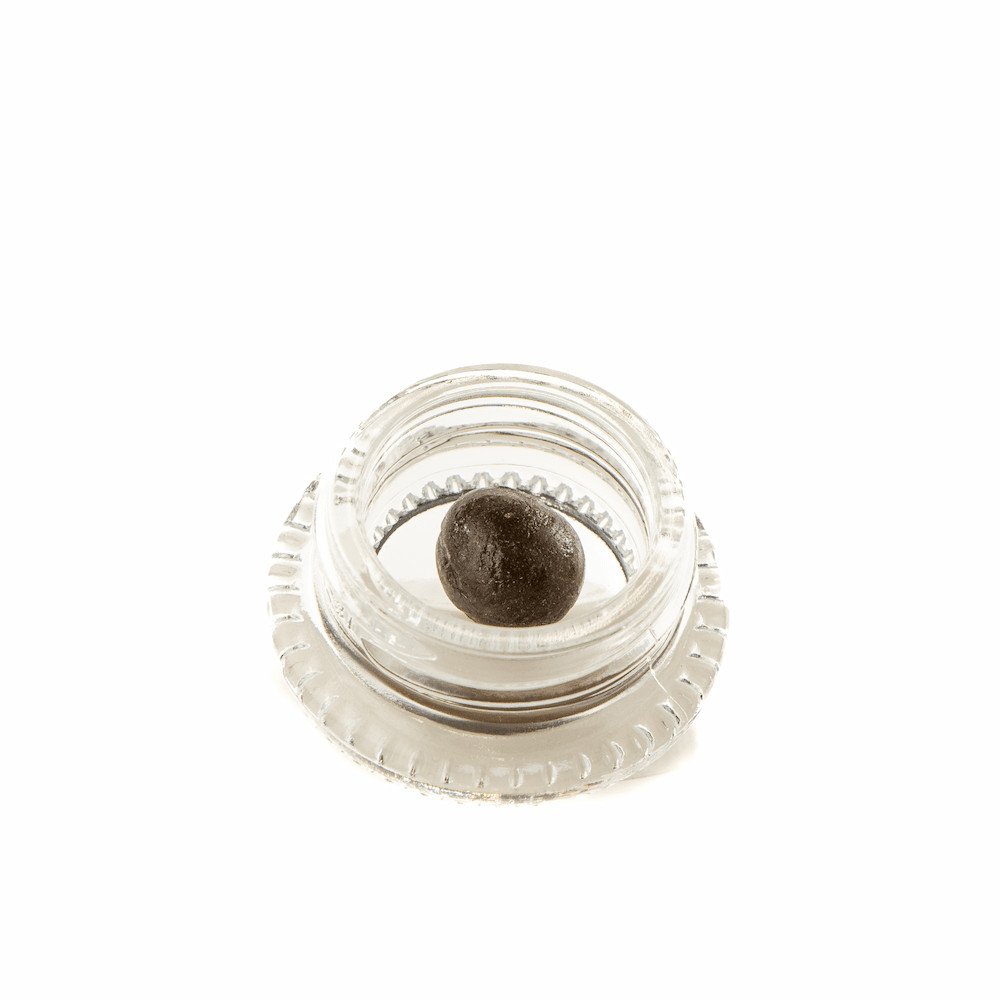
Sunset Lake Cannabis makes temple balls from fresh-frozen solventless icewater hash.
Brick Hash — The classic. Brick hashish has been produced for centuries, aging and developing complexity kind of like a fine wine. It's famously produced in regions like Morocco, Lebanon, and Afghanistan, where it remains a cornerstone of cannabis culture. Traditional dry-sift methods are used to collect trichomes, which are then pressed into dense bricks for storage and transport.
Temple Balls — One of the most revered forms of hash, temple balls are hand-rolled into smooth, dense spheres that continue to cure and improve over time. We're proud to offer Sunset Lake Cannabis Temple Balls, made from our sungrown Vermont cannabis cultivars like Honey Banana and Guava. If you're looking to buy Temple Balls in Vermont, check out the retail finder for a list of dispensaries that may carry Sunset Lake Cannabis Temple Balls..
Bubble Hash — Bubble hash straddles the line between traditional hashish-making and modern hash techniques. Ice-cold water is used to agitate the cannabis, causing trichomes to break off and sink through a series of fine mesh bags — using technology like refrigeration and precision screens that earlier hashmakers didn't have access to. Because the process is so gentle and low-temperature, bubble hash retains more of the delicate terpenes than many other methods, resulting in a flavorful, aromatic product. Vermont bubble hash made from quality sungrown flower is particularly stunning. Bubble hash is rated from 1 to 6 stars, with higher numbers being considered higher quality because they contain less residual plant material. 5 and 6 star bubble hash is typically referred to as “full melt bubble hash.” Not all bubble hash reaches this elite status but when it does, it's the crown jewel of solventless concentrates and absolutely worth tracking down for your next session.
Full Melt Hash — You might hear "full melt" thrown around quite a bit when people talk about premium hash. It's not exactly its own category, but rather the highest grade of bubble hash available (though technically you can find full melt dry sift in Vermont as well). The name says it all: full melt refers to hash that melts completely into liquid oil when heated, leaving virtually no ash or plant residue behind. That clean vapor tells you it's loaded with intact trichome heads and almost zero contaminating plant material, which translates to maximum flavor, potency, and a smooth dabbing experience that won't gum up your dab rig. For concentrate lovers, nailing a proper dab with full melt is all about that rich, terpene-forward hit that bubbles and sizzles beautifully without scorching.
How Do You Smoke Hashish?
Hash is incredibly versatile. You can crumble a little on top of a bowl, roll it into a joint (or go fancy with a hash hole joint, where a rope of hash runs through the center), or even enjoy it on its own. (Stay tuned — we'll be linking to a full "How to Smoke Hashish" guide here soon!)
Modern Cannabis Hash
When today's weed enthusiasts talk about "hash," they often mean something a bit different from the traditional brick or ball. Products like Rosin, Shatter, and Wax have become wildly popular with marijuana connoisseurs, and for good reason: they're incredibly potent and can deliver an exceptional flavor experience. One big reason people gravitate toward "live" products in particular: the "live" designation means the cannabis was processed fresh or fresh-frozen (right after harvest, before drying and curing), which preserves the aromatic profile of the living plant — including those delicate, highly volatile terpenes that can be lost during the drying process.
What is Rosin?
Rosin is a solventless concentrate made by applying heat and pressure to cannabis material — no chemicals required. It's one of the most beloved products among cannabis enthusiasts because it's clean, potent, and full-flavored.
Live Rosin is made from fresh-frozen cannabis, pressing ice water hash (bubble hash) that was made from freshly harvested, never-dried plant material. Because the plant is frozen immediately after harvest, all those volatile terpenes are locked in. The result? A solventless live rosin that is about as close to the living cannabis plant as you can get in a concentrate. Vermont live rosin has developed a devoted following among local connoisseurs, and if you're looking to buy live rosin in Vermont, check with your local dispensary for current offerings. (You may even find live rosin vapes and live hash rosin carts like Sunset Lake Cannabis Strawberry Pie Eyed at select Vermont dispensaries.)
Flower Rosin is pressed directly from dried and cured cannabis flower. It's a great entry point into the world of rosin and tends to be more accessible than live rosin. The downside is that it can contain more plant material than other types of rosin, and some folks view it as a less desirable product for dabbing.
Hash Rosin — Hash rosin is made by pressing bubble hash rather than flower, which typically results in a purer, more refined product. And just like with live rosin, you can have Live Hash Rosin (also called fresh-frozen hash rosin), made from bubble hash that was produced from fresh-frozen cannabis. The layers of quality just keep stacking up. Later in 2026 you’ll be able to find live hash rosin from Sunset Lake Cannabis cultivars including Strawberry Pie Eyed and Pink Pie.
What is Cannabis Resin?
Unlike rosin, cannabis resin is extracted using solvents like ethanol, CO2, or hydrocarbon gases (such as butane or propane). These methods are efficient and effective, though the end product requires careful purging of residual solvents before it's safe to consume.
Cured Resin is made from cannabis that has been dried and cured before extraction. Cured resin is widely available and is the basis for many popular concentrate products.
Live Resin uses fresh-frozen cannabis as its starting material, just like live rosin. The fresh-freeze captures more of the plant's original terpene profile, resulting in a more aromatic and flavorful product than cured resin.
Solid Cannabis Concentrates
Modern hash also comes in a variety of solid forms, each with its own unique texture and consistency:
Cannabis Shatter — Shatter is a brittle, glass-like concentrate that "shatters" when broken (hence the name). Vermont shatter tends to be amber to golden in color and is known for its high potency and clean flavor.
Cannabis Wax — Wax has a softer, waxier consistency than shatter. It's easy to handle and a popular choice for dabbing.
Budder / Badder — Budder (or badder) has a creamy, butter-like consistency achieved through a whipping process during production. Vermont is famous for its silky dairy butter, and Vermont budder is just as rich and gaining attention among concentrate aficionados.
Cannabis Crumble — No, not the cookie chain Crumbl — cannabis crumble is a dry, crumbly concentrate with a honeycomb-like texture. It's easy to handle and works great as a bowl-topper or in a dab rig.
THC Diamonds — Cannabis diamonds are crystalline structures of near-pure THCa, often found swimming in a pool of terpene-rich “sauce.” Diamonds are among the most potent cannabis products available, and should only be used by experienced concentrate connoisseurs.
These modern concentrate products are most commonly consumed via dabbing — using a specialized pipe called a dab rig and a torch, vaporizing the concentrate at precise temperatures. Check out our beginner's guide to How to Dab Cannabis Concentrates to learn the full process.
A quick shoutout to some of the most respected hashmakers in the world, whose work has helped elevate the craft of hash to an art form: the late Frenchy Cannoli and his wife Madame Cannoli (Kimberly Hooks), Cherry Blossom Belle (Laura Bell), and Certified Ganjier Nikka T (Nick Tanem) are all legendary hashishins whose passion and expertise continue to inspire a new generation of hash enthusiasts.
Other Cannabis Concentrates
Beyond the concentrates you'll typically find on a dispensary shelf, there are a couple of other cannabis concentrate products worth knowing about. FECO and cannabis distillate don't usually get the same fanfare as live rosin or THC diamonds, but they play an important role in the broader cannabis landscape — especially for medical patients and product manufacturers.
What is FECO?
FECO stands for Full Extract Cannabis Oil. It's a highly concentrated, whole-plant cannabis oil typically made using alcohol as a solvent, which is then fully evaporated, leaving behind a thick, dark, incredibly potent oil. Medical cannabis patients use FECO therapeutically, and it's typically administered via a syringe for precise dosing — because yes, it is that potent. Typically, medical marijuana patients will use a portion the size of a single grain of rice. A little goes a very long way! FECO also makes its way into cannabis topicals, like our Super Salve.
What is Cannabis Distillate?
Cannabis distillate is a highly refined cannabis oil that has been purified through a distillation process, stripping away most everything except the target cannabinoid (usually THC or CBD). The result is an odorless, flavorless oil that's incredibly potent and consistent. Distillate is used primarily in the production of vape carts and edibles like weed gummies, where a neutral-flavored, high-potency concentrate is ideal. It's typically not available for direct purchase by consumers at the dispensary level, but you'll find it as the base for many popular cannabis products, like our High Branch Sparkling Cannabis Cider.
Where Can I Buy Cannabis Concentrates Near Me?
Many licensed Vermont dispensaries carry a broad selection of cannabis concentrates, from Vermont live rosin to Vermont THC diamonds and beyond. Use our Retail Finder to locate a Vermont dispensary near you that carries Sunset Lake Cannabis products.
One important thing to look for when shopping for pot concentrates: Certificates of Analysis (COAs). Because concentrates are, well, concentrated, any contaminants present in the starting material (residual solvents, pesticides, heavy metals, etc.) will also be more concentrated in the final product. Always ask your Vermont pot shop or dispensary for COAs to confirm your concentrates have been tested and are free of harmful contaminants. Your lungs will thank you!
Ready to explore? Whether you're shopping for Vermont live rosin, temple balls, or something in between, find a retailer near you and ask about Sunset Lake Cannabis concentrates — grown with care right here in South Hero, VT.
Updated: 06/28/26