
What Are Cannabinoids? A Vermont Consumer’s Guide to Understanding Cannabis Compounds
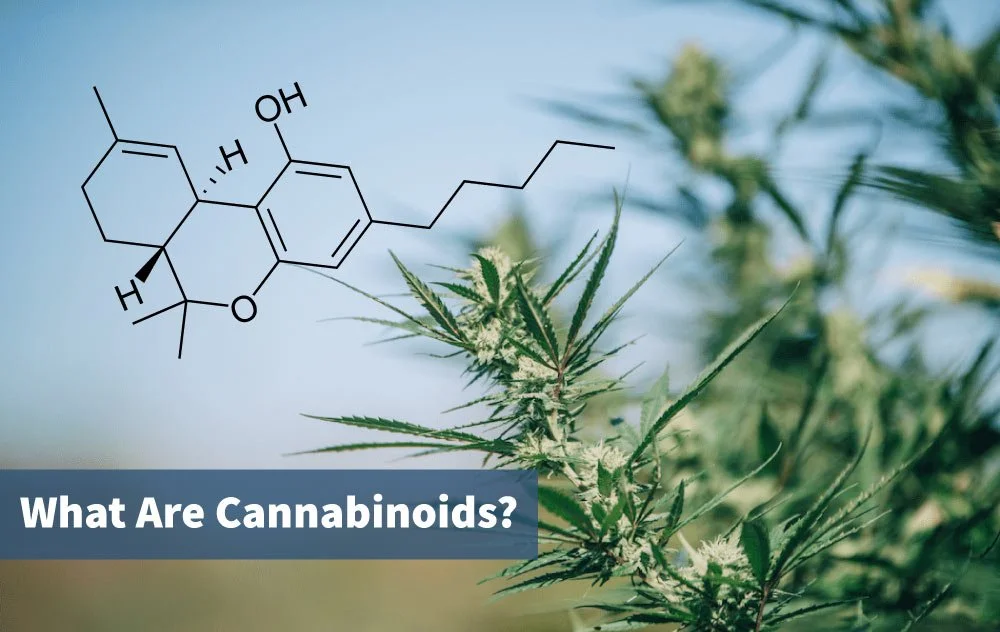
Did you know? Cannabinoids exist within our bodies, in our beloved cannabis plants, and are also created by scientists. As research opportunities become more accessible, scientists have discovered dozens of different compounds that make up the classification of cannabinoids. While we’re most familiar with Delta-9 Tetrahydrocannabinol (THC) and Cannabidiol (CBD), new ones are steadily being discovered.
As Vermont's adult-use cannabis market continues to mature, local consumers deserve clear, science-backed information about what's in their products. Whether you're shopping at dispensaries near Burlington, picking up recreational weed near Brattleboro, or exploring hemp-derived options from Sunset Lake Farms, understanding cannabinoids helps you choose wisely. This guide breaks down the science simply—no chemistry degree required!
Key Takeaways
Cannabinoids exist in three forms: plant-based (phytocannabinoids), internally produced (endocannabinoids), and human-made cannabinoids from laboratories.
All mammals process cannabinoids through the Endocannabinoid System (ECS), governing functions like sleep, mood, and immunity.
THC targets CB1 receptors in the nervous system, while CBD engages CB2 receptors in the immune system, skin, and digestive tract.
Raw plant material contains acid forms (THCa, CBGa) that require decarboxylation to activate.
Delta-8 THC and Delta-10 THC appear in hemp products but lack research on safety, and are illegal in many states, including Vermont.
Understanding the Endocannabinoid System
Cannabinoid compounds produce biological effects for all mammals thanks to the Endocannabinoid System (ECS). Each of us has receptors in our body that receive and uniquely interact with different cannabinoids. Our body even creates our own! These are the endocannabinoids: endo from the Greek term meaning from within. While there are at least seven known endocannabinoids, two of these neuromodulators have been more thoroughly studied; 2-arachidonoylglycerol (2-AG) and Arachidonoyl Ethanolamide Anandamide (AEA). While the finer minutia of the what or why our body synthesizes these endocannabinoids is still to be fully fleshed out, the broader understanding is to do with memory, sleep, anxiety, or even immunity. (1, 2)
How THC and CBD Interact with Your Body
Why we have any understanding of the ECS is due to studying phytocannabinoids (phyto from the Greek for plant). These are the cannabinoids that are born within the trichomes of the plants and contribute to The Entourage Effect along with acids, terpenes, and flavonoids. Scientists have mapped THC and CBD interactions in our bodies. These well-studied phytocannabinoids primarily engage with CB1 and CB2 receptors. CB1 is predominantly found in the nervous system, while CB2 is expressed in the immune system, skin, and digestive tract, so it may be no surprise to read that the more psychoactive THC predominantly binds to CB1 receptors while CBD seeks out CB2.
Beyond THC and CBD: CBG, Terpenes, and The Entourage Effect
The cannabis scientists of the world are still parsing out where and how other phytocannabinoids such as CBG, CBC, and THCV interact with the ECS. Preliminary research has even shown that foods that have throughout time been considered “super foods” due to their perceived health benefits, such as cacao, interact with our ECS. (3) There is also one terpene commonly found in black pepper and several other spices, beta-Caryophyllene, that interacts with the ECS. (4)
Now, it’s important to note that phytocannabinoids do not come ready-made for human consumption. Inside of the trichome, cannabinoids begin as cannabinoid acids. Instead of THC or CBG, for example, we find them in the forms THCa or CBGa. Acidic forms of cannabinoids may not be bio-active in humans. Through the process of decarboxylation (typically done through heating for cannabis products) we are able to access the cannabinoids in their full expression. (5)
While we can find cannabinoids in plants and within the human body, we can also construct them. There are labs out there in the world that have dedicated their resources to replicating and creating cannabinoids that may provide therapeutic benefits.
Hemp-Derived THC and Lab-Created Cannabinoids
Alternatively, lab-created cannabinoids have been causing the federal government a bit of grief. The label “hemp derived THC” is a bit like the wild west. There are synthetic cannabinoids such as Delta-8 Tetrahydrocannabinol (D8 THC) or Delta-10 Tetrahydrocannabinol (D10 THC) that are sometimes shown on the labels of these hemp-derived products. These are similar in structure to the naturally-occurring delta-9 Tetrahydrocannabinol (D9 THC) phytocannabinoid we’re familiar with, but are not yet fully understood. There are also fully synthetic cannabinoids, a topic we covered in another post.
It’s worth noting that D8 THC and D10 THC are illegal to sell or purchase in Vermont. (6)
There’s Always More to Learn About Cannabinoids
There has never been a more interesting time to get curious about cannabinoids. An abundance of research is being done and we’re learning more all of the time. They’re within us, they’re in our favorite plant and possibly in others, and they are being worked on for our well-being by medical scientists right this very second.
Whether you're browsing the menu at your local Vermont pot shop or stocking up on a day trip through the Green Mountains, knowing your cannabinoids means knowing your product. Have questions? Stop by Lake Effect Vermont, our very own cannabis market in South Hero, or reach out via our contact form—our team is always happy to talk cannabis science with fellow Vermonters!
Disclaimer: This blog post is for informational purposes only and should not be considered legal or medical advice.
References:
Lu, H.-C., & Mackie, K. (2021). "Review of the Endocannabinoid System." Biological Psychiatry: Cognitive Neuroscience and Neuroimaging. https://pmc.ncbi.nlm.nih.gov/articles/PMC7855189
Battista, N., et al. (2012). "The endocannabinoid system: an overview." Frontiers in Behavioral Neuroscience. https://www.frontiersin.org/journals/behavioral-neuroscience/articles/10.3389/fnbeh.2012.00009/full
Di Tomaso, E., Beltramo, M., & Piomelli, D. (1996). “Brain cannabinoids in chocolate.” Nature, 382(6593), 677–678. https://doi.org/10.1038/382677a0
Gertsch, J., Leonti, M., Raduner, S., Chen, J.-Z., Xie, X.-Q., Altmann, K.-H., et al. (2008). "Beta-caryophyllene is a dietary cannabinoid." PNAS, 105(26), 9099–9104. DOI: https://doi.org/10.1073/pnas.0803601105
Wang, M., Wang, Y.-H., Avula, B., Radwan, M. M., Wanas, A. S., van Antwerp, J., Parcher, J. F., ElSohly, M. A., & Khan, I. A. (2016). "Decarboxylation Study of Acidic Cannabinoids: A Novel Approach Using Ultra-High-Performance Supercritical Fluid Chromatography/Photodiode Array-Mass Spectrometry." Cannabis and Cannabinoid Research, 1(1), 262–271. DOI: https://doi.org/10.1089/can.2016.0020
Vermont Cannabis Control Board Rule 2.17 (effective 07/15/2025). https://ccb.vermont.gov/laws-rules-and-regulations