
What Are Trichomes? A Vermont Guide to Understanding These Cannabinoid and Terpene Factories
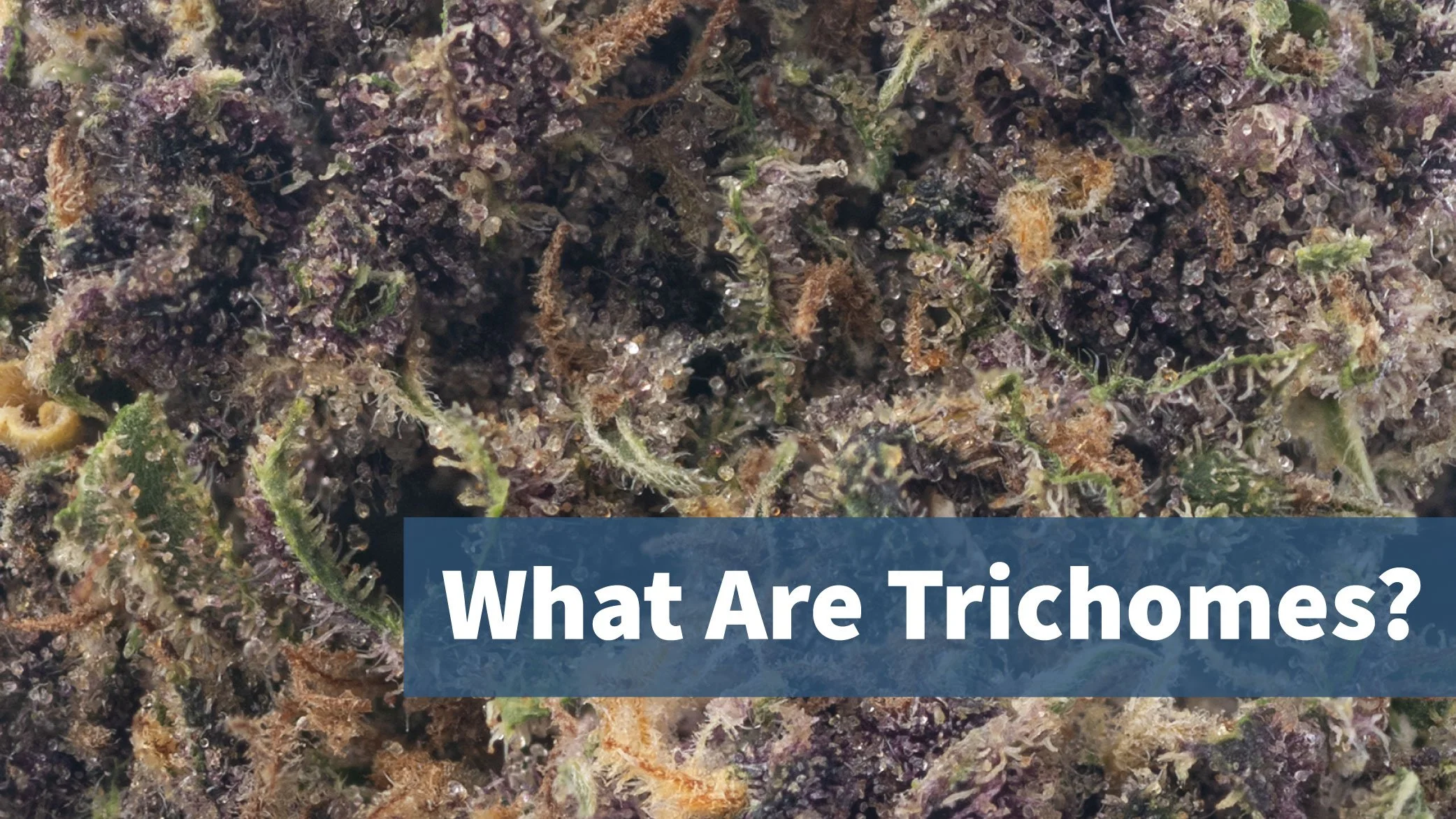
Tiny, sticky crystal balls reflect off of the surface of the cannabis flowers in the Sunset Lake field. We call these small disco balls trichomes. Trichomes are found on a myriad of flowers and leaves in the plant kingdom, but are particularly important to cannabis’ unique, place-based, psychoactive experience.
Trichomes are the exemplars of the phrase “small, but mighty”. On average, these structures measure in at 25-200 microns, roughly 1/1000th to 1/100th of an inch . What they lack in size, they more than make up for in function and in numbers. On a single sugar leaf (a leaf that grows out from the cannabis flower as opposed to lower on the stalk), hundreds of sparkling trichomes populate its surface. While there are multiple types of trichomes that appear on these flowers and leaves, such as capitate sessile and the bulbous, the most common structure is the capitate-stalked trichome. This looks most traditionally like a wizard’s scepter - a long stem with an orb on top. It is these spheres on the top that we are most interested in.
Key Takeaways
Trichomes are microscopic resin glands (25–200 microns) that produce and store all cannabinoids and terpenes responsible for cannabis's effects and flavors.
Trichomes serve as the plant's natural defense system by deterring herbivores, reflecting UV light, and adapting their chemical composition to environmental conditions.
Trichomes form the foundation of all cannabis concentrates including kief, hash, and rosin.
Trichomes Are Little Defense Factories
As the cannabis plant’s season inches towards conclusion, they throw all of their energy into producing flowers with the best environmental defenses possible, meaning they produce the best trichomes possible. You see, within these gleaming globes is where all of the magic we love about the cannabis plant develops; unique churning combinations of terpenes and the acidic forms of cannabinoids that shape how that cultivar will make us feel. Inside of the trichome is where enzymes convert precursor molecules, including the dominant CBGa, into the myriad of cannabinoids we’re hearing more and more about. The effects we feel when consuming the culmination of everything in trichomes is known as the entourage effect: from THC, CBD, terpenes and CBN to less familiar cannabinoids like CBC, CBG, THCV. These all begin in the trichome.
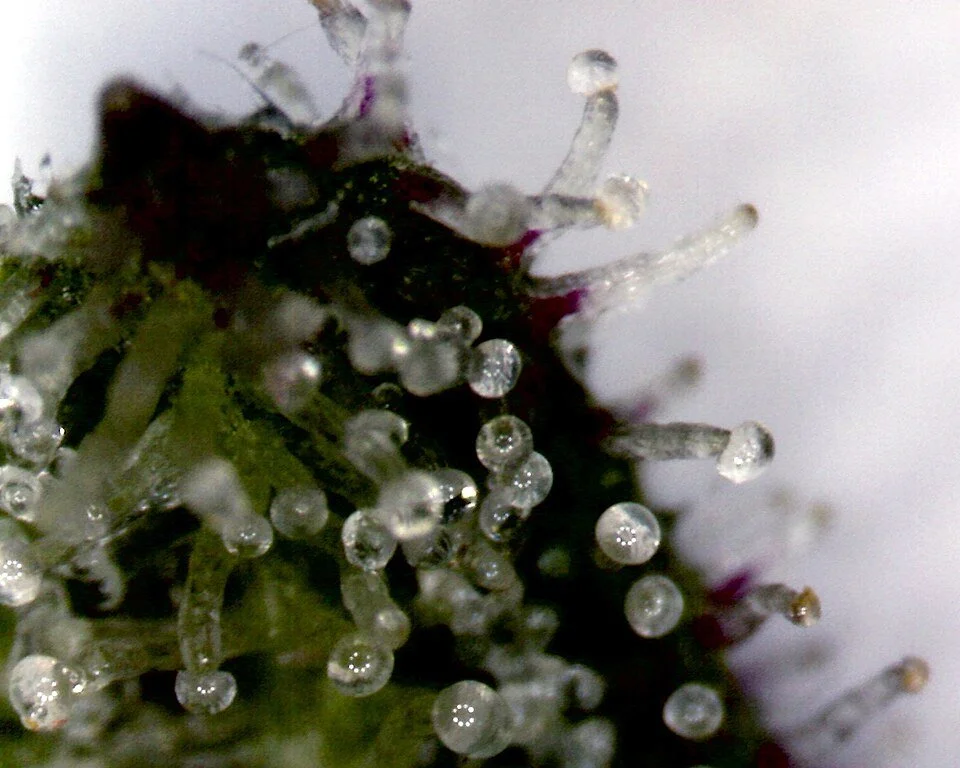
Trichomes on a cannabis flower. (Wikimedia Commons)
Growers, scientists, and the internet at large have dubbed trichomes“factories” because they produce such feats of chemistry. What’s more, the blend of cannabinoids and terpenes that trichomes make are tailor made to the plant’s genetics and environment. It’s a continuation of the conversation around terroir: where a plant is grown is rooted in their place-based experience. As the plants are bombarded with the varying pressure of sun, rain, and pests, the trichomes are reacting and alchemizing their oils accordingly.
As much as trichomes are small, they are also delicate. If you’ve ever touched a marijuana plant that’s just about ready to be harvested, and come away with sticky fingers, or the cultivar’s unique smell wafting through the air, you’ve definitely broken open some trichomes and are inhaling the terpenes within.
That bursting ease is by design. Trichomes are perched on cannabis plants for reasons far beyond our consumption pleasure. The trichome is one of the evolutionary strategies plants, including cannabis, have utilized to protect themselves from the perils of life in the wild. When an herbivore, like a deer, munches on the plant, trichomes will pop in their mouth leaving an unpleasant, sticky sensation as well as a strong bitter taste from the oils. Trichomes also reflect sunlight, protecting the flowers from high summer UV and sunburns.
Harvesting Ripe Trichomes
Growers even use the subtle language of trichomes to help inform them on harvesting at the best time. As trichomes reach peak ripeness, they appear to the naked eye cloudy. However, as they begin to degrade, the oil begins to turn amber and grow darker. While every grower has their own preferences, the general field consensus is no more than 20-30% of the plants’ total trichomes should be amber at the time of harvest. Any more than that is likely to change how we end up experiencing that plant as the amber color indicates the decline of THCa dominance within the trichome. What we’re witnessing when we see the trichomes change color is the THCa further changing into CBNa through oxidation and light exposure. But we’ll get into that in our CBN blog post another time.
Even more pressing, the trichomes are specifically what growers are harvesting when they are growing plants to create cannabis concentrates. Solventless concentrates, like hash rosin, are simply physically manipulated and agitated trichomes. When making bubble hash, for instance, the trichomes were knocked off of frozen flower in an ice water bath, collected with sieves, dried, and then gently warmed and pressed into your favorite live hash rosin vape carts and dabs. Trichomes are what collects in the kief catcher at the bottom of your grinder. They’re what press together to create hash bricks. The concentrates end up much more potent than the whole, smokeable marijuana flower because of this trichome isolation. The meltable heads of the trichomes contain everything that you want to consume without the excess of plant matter needing to be burned.
The trichomes, while delicate and dainty, are the unsung super stars in cannabis. From the plants’ defenses to the consumers’ experiences, the trichome is ready to burst open and reveal what’s been made. With everything that we do know, scientists have only just begun to scratch the surface of the science within the trichome and they’re learning more all of the time.
